














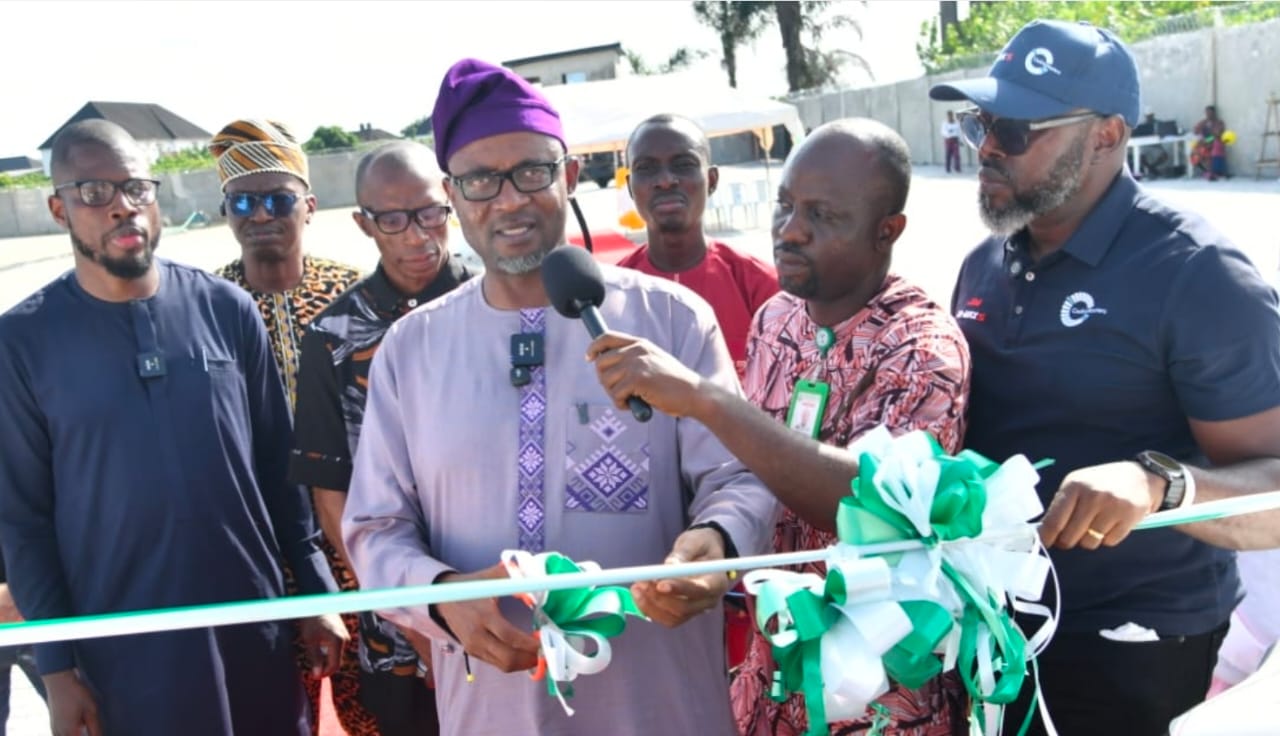
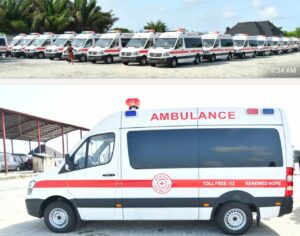
 The Chief Medical Director of the Lagos University Teaching Hospital (LUTH), Prof. Wasiu Lanre Adeyemo, on behalf of President Bola Tinubu, has commissioned 79 advanced life-support ambulances for deployment to tertiary healthcare institutions across the country.
The ambulances, assembled locally and equipped with modern emergency medical facilities, were unveiled in Lagos as part of activities marking the third anniversary of the Tinubu administration.


The initiative, facilitated through the National Emergency Medical Services and Ambulance System (NEMSAS) under the Federal Ministry of Health and Social Welfare, is aimed at strengthening emergency medical response and improving access to quality healthcare nationwide.
Speaking at the commissioning ceremony, Adeyemo described the project as a demonstration of the Federal Government’s commitment to improving emergency healthcare delivery under the Renewed Hope Agenda.
He said the ambulances would significantly enhance the capacity of tertiary hospitals to respond promptly to medical emergencies, improve referral systems and reduce preventable deaths resulting from delays in accessing care.
According to him, the intervention aligns with the health sector reforms being driven by the Coordinating Minister of Health and Social Welfare, Prof. Muhammad Ali Pate, which focus on strengthening healthcare infrastructure, expanding emergency care services and advancing universal health coverage.
“The deployment of these ambulances represents a major step towards building a more coordinated and responsive emergency healthcare system. Timely transportation remains a critical factor in saving lives and improving treatment outcomes,” Adeyemo said.
He noted that all 79 ambulances were assembled in Nigeria, including the installation of emergency medical equipment, underscoring the country’s growing capacity in local manufacturing, healthcare technology and automobile engineering.
Describing the project as a boost for indigenous innovation, Adeyemo said it would not only improve healthcare delivery but also stimulate local production, create jobs and reduce dependence on imported emergency response vehicles.
“These ambulances are proof that Nigeria can produce world-class emergency response vehicles locally. Beyond healthcare delivery, this initiative supports local industry and strengthens confidence in indigenous capacity,” he said.
Adeyemo explained that the vehicles are fitted with advanced life-support equipment and communication systems designed to enable receiving hospitals to prepare for patients before arrival, thereby improving the efficiency of emergency care.
He added that the ambulances operate on a dual-fuel system, utilising both Premium Motor Spirit (PMS) and Compressed Natural Gas (CNG), in line with the Federal Government’s energy diversification and sustainability objectives.
The LUTH chief stressed that access to efficient emergency transportation is as important as investment in hospital infrastructure, noting that healthcare services must be reachable when emergencies occur.
“Whether from homes, schools, markets, highways or workplaces, patients must be able to reach healthcare facilities quickly. These ambulances will improve emergency response times and help reduce avoidable deaths and complications,” he said.
He urged state governments, local councils, private healthcare providers and other stakeholders to leverage the growing local capacity in ambulance production to meet future emergency transportation needs.
Adeyemo reaffirmed the Federal Government’s commitment to expanding access to affordable and quality healthcare, noting that the nationwide distribution of the ambulances would further strengthen emergency response systems and support ongoing efforts to reduce morbidity and mortality across the country.