

















By Esther Sangodele
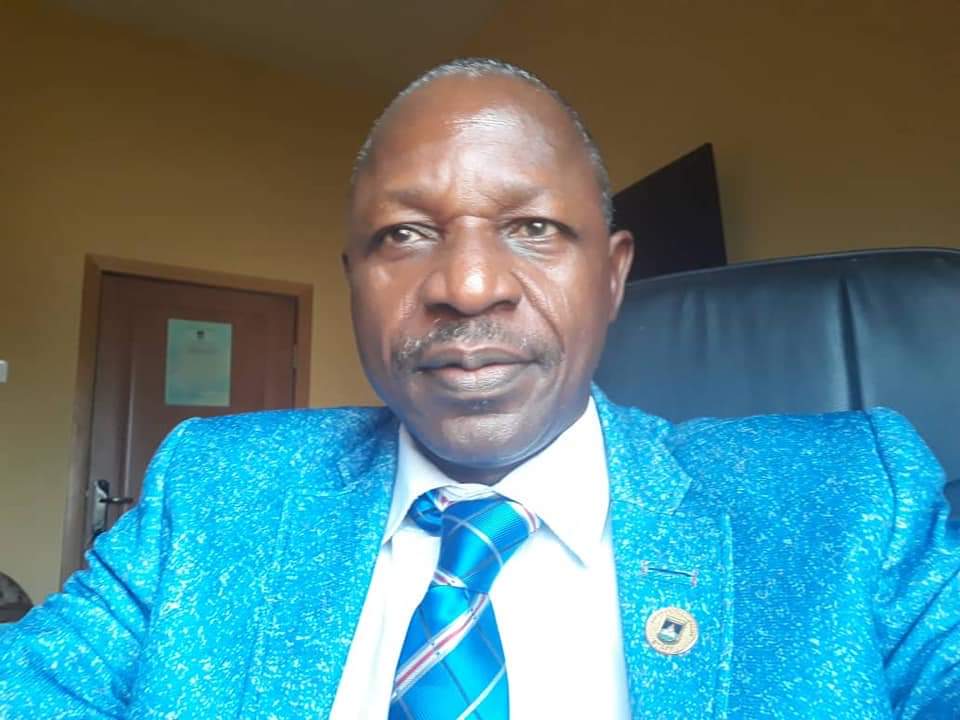
The President of the Association of Communication Scholars and Professionals of Nigeria (ACSPN), Professor Rotimi Olatunji, has called on journalists, media organisations, regulators and political actors to deploy artificial intelligence (AI) responsibly and uphold ethical journalism to safeguard Nigeria’s electoral integrity ahead of the 2027 general elections.
Olatunji warned that while AI has the potential to improve voter education, election communication and public engagement, its misuse through deepfakes, misinformation, disinformation and automated propaganda could undermine democracy and erode public trust.
He made the remarks while delivering the keynote address, “Electoral Integrity in an AI Era: The Role of Responsible Media and Culture in Safeguarding Democracy in Nigeria,” at the 50th anniversary celebration and Safe Democracy Summit of the Radio, Television, Theatre and Arts Workers Union of Nigeria (RATTAWU) in Lagos.
According to the Lagos State University professor, Nigeria’s democratic future depends not only on technological innovations introduced by the Independent National Electoral Commission (INEC) but also on the ethical conduct of journalists, political leaders and citizens.
“Nigeria stands at a critical democratic crossroads. Artificial intelligence is making elections faster and more visible, but it is also making deception cheaper, more scalable and harder to detect. The question is not whether AI will be used in the 2027 elections, but whether we will use it responsibly enough to protect trust, truth and voter choice,” he said.
Technology Alone Cannot Guarantee Credible Elections
Olatunji noted that despite the introduction of technologies such as the Bimodal Voter Accreditation System (BVAS) and the INEC Result Viewing Portal (IReV), the 2023 general elections were still characterised by controversies over result transmission, vote-buying, insecurity and public distrust.
He said the experience demonstrated that technology, on its own, cannot guarantee free, fair and credible elections without transparency, accountability and public confidence.
The communication scholar warned that AI has created new risks through cloned voices, synthetic images, manipulated videos and deepfakes capable of misleading voters and distorting democratic processes.
According to him, the major challenge ahead of the 2027 elections is no longer limited to who counts the votes but also who controls public narratives before, during and after the polls.
The ACSPN president expressed concern over the growing spread of fake news, hate speech, ethnic and religious propaganda during election periods, noting that studies conducted by the association and other researchers revealed persistent ethical lapses in election reporting.
He urged media organisations to embrace AI primarily as a verification tool rather than an instrument for manipulation.
According to him, newsrooms should strengthen their use of digital forensic tools, fact-checking systems and rigorous editorial verification processes before publishing election-related content.
“Every newsroom should treat AI-generated material as potentially deceptive until proven authentic, especially where it concerns candidates, election results, violence or allegations of misconduct,” he said.
He added that journalists must strengthen source verification, independently verify claims and clearly label unverified information instead of presenting it as established facts.
Olatunji also called for stronger collaboration among media organisations, fact-checking bodies, technology companies, election observers and regulatory agencies to combat the spread of false information during election periods.
He maintained that responsible communication, ethical journalism and an informed civic culture remain indispensable to credible elections.
According to him, democracy is defended not only at polling units but also in newsrooms, broadcast stations and across digital platforms.
“If the media become ethical, culturally grounded and technologically disciplined, AI can strengthen democracy instead of weakening it. Otherwise, 2027 may become the first Nigerian election where the battle for truth is as important as the battle for votes,” he said.
Olatunji stressed that the responsible deployment of AI, combined with professional journalism and robust fact-checking, would be critical to preserving public trust and strengthening Nigeria’s democratic process in the build-up to the 2027 general elections.