














There are telephone calls one answers casually and there are calls one takes with the quiet attention reserved for voices whose words have, over the years, acquired the weight of experience.

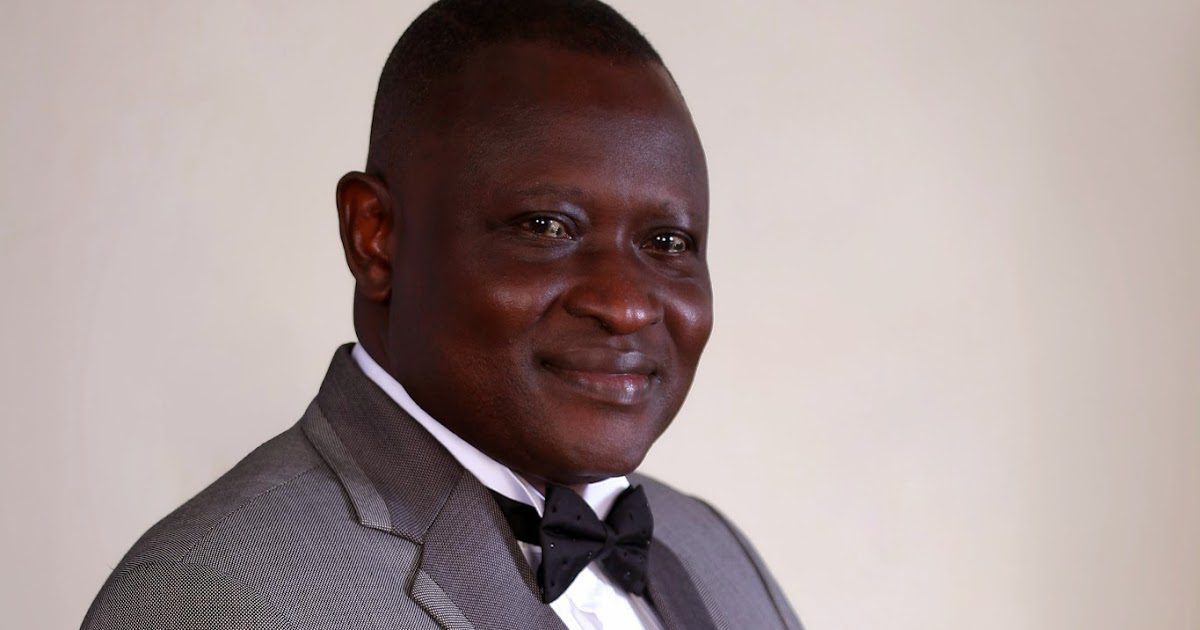
A call from Professor Willie Siyanbola belongs to the latter category.
Years after he left office as Director-General of the National Centre for Technology Management (NACETEM), an agency of the Federal Ministry of Science, Technology and Innovation, his voice remains familiar to many of us who once worked under his leadership. The office may have changed hands. The years have moved on. Careers have taken different turns. Yet, somehow, the relationship did not end with the tenure.
That is the thing about Professor Siyanbola.
He has a way of making distance irrelevant.
At 66, he has demonstrated that leadership need not be confined to the walls of an office, nor should mentorship expire with an appointment letter. For him, leadership appears to be less about occupying a position than about remaining available to people whose lives he has touched.
I write this not as a distant observer but as one of those fortunate to have experienced his leadership at close quarters.
Between 2007 and 2013, I worked with Professor Siyanbola at NACETEM. Those years belong to an important chapter of my professional journey. Working with him was not merely an institutional experience; it was an apprenticeship in the subtler dimensions of leadership—the importance of encouraging people, sharing knowledge, listening to younger colleagues and making room for others to grow.
But perhaps the most revealing part of that relationship has come after 2013.
It is easy to be a mentor when you are the person occupying the office.
You have authority. People come to you. Your telephone rings. Your opinion is sought because your position requires it.
The more difficult test comes after the office has been surrendered to history.
Who still calls you?
Whose progress still matters to you?
Whose uncertainty still troubles you enough to offer counsel?
In Professor Siyanbola’s case, the answer is unmistakable: the people who once worked with him remain within the circle of his concern.
Thirteen years after his departure from NACETEM, I still find myself tapping into his wealth of experience and wisdom. And each time, I am reminded that genuine mentorship has little to do with physical proximity. A mentor can be miles away and still be close enough to steady one’s hand.
Sometimes, it is a conversation.
Sometimes, it is a word of encouragement.
Sometimes, it is a piece of advice that arrives when a professional decision appears cloudy.
And sometimes, it is simply the reassurance that someone with a longer view of the road has been listening.
This is the quiet power of Professor Siyanbola’s leadership.
He does not merely dispense advice; he encourages people to believe that they can become more than their present circumstances suggest.
That quality matters enormously in a country where many young professionals navigate their careers without the benefit of sustained guidance. Institutions often have supervisors, managers and directors. What they do not always have are mentors—people who take an interest in the person beyond the job description.
Professor Siyanbola has shown that the two roles are not necessarily the same.
A boss supervises your work.
A mentor takes an interest in your becoming.
The distinction is important.
A supervisor may tell you what needs to be done. A mentor helps you understand why it matters. A supervisor can assess your performance. A mentor can sometimes see possibilities in you that you have not yet learnt to see in yourself.
The finest mentors, however, do something more profound: they eventually make themselves less necessary.
They give you enough wisdom to walk without them.
They lend you confidence until you can generate your own.
They open doors, but they also teach you how to knock.
This is where Professor Siyanbola’s influence becomes especially significant. His legacy is not simply what he did while leading NACETEM. It is also what happened to the people who passed through his leadership.
A leader’s true monument is often invisible.
It is found in the careers of people he encouraged, in the decisions of those he counselled, in the confidence of those who once doubted themselves and in the generosity of those who, having received guidance, eventually turn around to guide others.
In that sense, Professor Siyanbola has been replicating himself—not by producing people who look or sound like him, but by transmitting a philosophy of leadership.
Learn.
Think.
Ask questions.
Keep improving.
And, when you eventually find yourself in a position to help another person, do not forget what it meant when somebody once helped you.
This is how leadership becomes generational.
A good leader builds an institution.
A great leader builds people.
An exceptional leader builds people who will, in turn, build others.
That last form of leadership has no retirement age.
It is also why age, in Professor Siyanbola’s case, should not be viewed merely as a number marking the passage of time. Sixty-six is, in many ways, a vantage point—a place from which the road travelled becomes long enough to appreciate the people encountered along it and the seeds planted almost unconsciously in earlier seasons.
Some seeds take years to germinate.
Mentorship is like that.
A word spoken to a younger colleague in 2009 may suddenly become meaningful in 2026. An admonition that appeared ordinary at the time may acquire new significance when one is confronted with a difficult decision years later. The wisdom of a mentor sometimes arrives in instalments.
That is why the passage of time has not diminished Professor Siyanbola’s relevance to those of us who once worked with him. If anything, it has deepened it.
When a former boss remains someone you can approach for counsel thirteen years after he left the institution, there is clearly something beyond hierarchy at work.
There is trust.
There is respect.
There is gratitude.
And, above all, there is relationship.
This is an important lesson for leadership in Nigeria today.
Public office is transient. Titles are temporary. The furniture of power eventually belongs to someone else. The signature on official documents changes. The occupant of the corner office moves on.
But people remember.
They remember how you made them feel when they were uncertain. They remember whether you encouraged them when they were struggling. They remember whether you shared your knowledge or guarded it jealously. They remember whether you treated their growth as an inconvenience or as part of your responsibility.
Long after the official records have been archived, these memories remain.
Professor Siyanbola’s continuing engagement with those who once worked with him suggests a conception of leadership that is refreshingly human. It is leadership as stewardship rather than ownership.
You occupy the office for a season.
The people remain.
And if you have done your work well, something of your best self remains in them.
Perhaps that is why the most fitting metaphor for his kind of mentorship is not a ladder but a tree.
A ladder helps one person climb.
A tree offers shade, extends branches and produces seeds.
The tree does not ask where the seeds will eventually take root. It simply gives.
At 66, Professor Willie Siyanbola has become, for many of those he has mentored, a source of that shade and a keeper of those seeds.
For me personally, the privilege of having worked with him between 2007 and 2013 has continued to yield benefits far beyond those six years. Thirteen years after he left NACETEM, I still seek his perspective. I still value his counsel. I still recognise in his words the experience of someone who has travelled a considerable distance along the professional road.
That, perhaps, is the finest tribute one can pay a mentor.
Not that he once occupied an important office.
Not even that he was once your boss.
But that, years later, when the road becomes uncertain, you still know whose number to call.
And when that call is answered, you know there will be no impatience on the other end—only the familiar voice of experience, offering perspective, encouragement and, sometimes, the gentle reminder to keep going.
At 66, Professor Willie Siyanbola’s leadership has therefore acquired a dimension beyond office and title.
He continues to lead through memory.
He leads through counsel.
He leads through encouragement.
He leads through the people whose lives he has helped shape.
And perhaps this is the most enduring form of leadership: to leave an office without leaving your people; to move away without becoming distant; and to grow older while continuing to make the younger ones around you stronger.
The years have passed since NACETEM.
The office has changed.
The world has moved on.
But the bridge remains.
And on that bridge, Professor Siyanbola continues to walk with those he once led—reminding us that the deepest relationships in professional life are not always measured by proximity, but by the willingness to remain present.
At 66, he has shown that a leader may leave an office, but a true mentor never really leaves his people.
Oluyi is the Head, Directorate of Public Relations and Corporate Affairs, University of Medical Sciences, Ondo