













No one will deny that the administration of Governor Seyi Makinde has brought significant positive impact to the religious landscape of Oyo State in the last seven years.
Religion is a sensitive sector in any society, particularly in Africa where it often dictates unity, social cohesion, and development. In Nigeria, we saw how close the sector came to dividing the country during the 2023 General Elections, when some politicians openly campaigned along religious and ethnic lines. It took the intervention of religious philosophers, elders and civil society to calm the tension.
Research and personal observation show that religion globally plays a significant role in shaping up to 75 per cent of societal growth. It influences social norms, education levels, family structures, and work ethics. In a country like Nigeria with a highly religious population across different ethnic and philosophical beliefs, the sector can easily tilt toward negativity if not properly managed.
Because politicians understand that religion commands huge followership, many are tempted to exploit it for political gain. Recently, President Bola Ahmed Tinubu urged politicians to refrain from campaigning on the themes of religion and ethnicity. At first, I thought it was unnecessary. But with the 2027 election cycle now officially beginning, I have come to realise that the President, with his experience, has sensed danger ahead. That was a huge and timely observation.
Indeed, many developed countries around the world, including the United Kingdom, United States of America, Russia, Germany, China and others give premium attention to religious harmony as part of their strategy to tackle socio-political challenges. Nigeria, and Oyo State in particular, must learn from this.
Africans are generally deeply religious. However, without spirituality that promotes tolerance, understanding and co-existence, conflicts become inevitable. This can affect self-determination, exploration and the fulfilment of collective destiny.
Oyo State, created on February 3, 1976, is blessed with adherents of the three major religions: Traditionalists, Muslims and Christians. The population is largely religious, with a small percentage who may not profess a specific belief but still acknowledges the supremacy of divinity.
Like every society, growth is a product of time, exposure, civility and deliberate policy push. Religion plays a vital role in that process. Historically, Oyo State’s natural population leaned toward traditional beliefs. But with the advent of Western civilization in the South West around 1900, Christianity and Islam became more prominent, making the state a multi-faith society.
Government policies have helped to stabilise religious relations over the years, but as the population grows and political competition intensifies, those structures can become overwhelmed. It therefore becomes imperative for successive administrations to devise binding strategies that promote peaceful co-existence.
There is no law, globally, that forbids the right to association, belief and religion. Not even military rule could suppress a man’s faith. Democracy has further deepened the expression of religion in Oyo State and Nigeria as a whole.
There have been times when one religion demanded more societal respect and equal rights than others. Philosophers warn that failure to provide a level playing field for all prevalent religions can breed rivalry, intolerance and socio-ethnic friction.
As a matter of fact, the administration of Governor Seyi Makinde has helped to cement religious tolerance in Oyo State through the creation of the Office of Interfaith. This is a historic and commendable step.
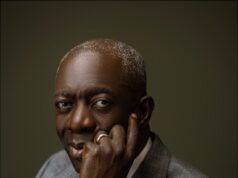
The Governor also succeeded in appointing a respected grassroots mobiliser and theologian, Dr. Olufemi Ibikunle, to head the office. Dr. Ibikunle is a scholar, criminologist, mediator and refined religious leader. I can say without blemish that he has been a credit to the Makinde administration since 2019. Through dialogue, advocacy and engagement, Ibikunle has fostered religious peace, unity and advanced ethnic development across the state.
However, the recent Isese Day Event held at Adamasingba Stadium on August 20, 2026 has brought to the fore a new demand: the need to establish by law an Agency for Interfaith Affairs. The purpose is to ensure equal distribution of state resources and appointments among the major religious adherents for improved peace and progress.
The approval of August 20 every year as a public holiday in Oyo State and other South West states is a welcome development and a temporary relief to religious rivalry. This success is largely the brainchild of Rev. Dr. Femi Ibikunle and the Adebo Ogundoyin-led Oyo State House of Assembly, through a law duly assented to by Governor Seyi Makinde in 2024.
My readers, while the public holiday is commendable, it cannot totally address the structural challenges in the religious sector. What is needed is the formalisation of an Agency for the three major religions.
We have a precedent in Oyo State. Since the establishment of the Agency for Persons with Disability, cases of abuse and neglect have reportedly reduced significantly. It is believed that a similar agency for interfaith affairs will provide structured leadership through the office of a Director-General, Executive Assistants, Senior Special Assistants, a permanent secretariat, liaison officers and other professionals as religious stakeholders may recommend.
Such a structure will greatly address rivalries, misconceptions, and empower government’s advocacy for peaceful co-existence doctrines. It will also ensure transparency and equity in the allocation of resources to religious groups.
To me, the present administration already has the template. All that is left is to mechanise a law for its establishment before future issues of religious intolerance arise. We must not wait for a crisis to “gnarl its head” before we act. We should institutionalise peace ahead of time.
In conclusion, it is an appeal to the current 10th Assembly in Oyo State to act on this demand for a more fulfilling and structured religious administration before the end of its tenure. The Pacesetter spirit must come to play. This must not be left as a spillover into another administration.
Doing this will be a true institutional legacy as Governor Seyi Makinde continues to set the standard for governance in Oyo State.
Ogunbusola is an Ibadan-based journalist, public affairs analyst, columnist, author, education expert and Fellow of the Eccolerite Institute for Peace Advancement. 08064214675, or
Email: waseyori2@gmail.com, Olawaleasnews@gmail.com
Advertisement