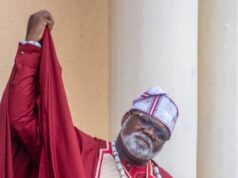

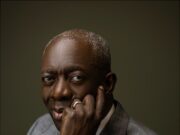
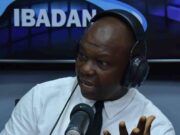





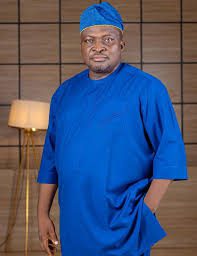
Dr Paul Oche Adoyi, a veterinarian, farmer, entrepreneur and candidate of the NDC for the Oyo South Senatorial District in the 2027 general election, has explained why he is seeking election to the Senate.
In this interview, Hon. Adoyi speaks on his motivation for joining the senatorial race, his vision for Oyo South, agriculture and food production, youth and women empowerment, the cost of governance, the minimum wage, and his support for Peter Obi’s presidential ambition.


Why are you contesting the Oyo South Senatorial District seat in 2027?
I am contesting because I believe there is a need for a different approach to representation and governance. I have spent a considerable part of my life in agriculture, entrepreneurship and community development, and I understand the challenges confronting ordinary Nigerians, particularly farmers, young people and small business owners.
Oyo South is blessed with human and natural resources. We have farmers, professionals, entrepreneurs, artisans, students and young people with enormous potential. What is required is purposeful representation that can connect these resources to opportunities.
My decision to contest is therefore not about seeking a title. It is about using the platform of the Senate to advocate policies that will improve the lives of the people and create an environment where people can produce, earn and prosper.
What informed your decision to seek elective office at this time?
Nigeria is at a critical point. We cannot continue to operate an economy where we consume more than we produce and depend excessively on imports.
As a farmer and entrepreneur, I have seen first-hand the difficulties people face. The cost of inputs is high, access to affordable finance is difficult, power remains a challenge and many young people are struggling to find sustainable employment.
I believe people who have practical experience in these areas should also participate in governance. We need legislators who understand the realities on the ground and can translate those experiences into sound policies and effective oversight.
What would be your priority if elected to represent Oyo South?
My priorities would include agriculture, food production, youth empowerment, women empowerment, infrastructure, education, healthcare and support for small and medium-sized businesses.
I would focus on agriculture because food security is fundamental to national security. If people cannot afford food, the consequences affect every aspect of society.
We need to make farming more attractive and profitable, especially for young people. This requires access to affordable inputs, mechanisation, improved seedlings, irrigation, extension services, storage facilities, processing and markets.
It is not enough to tell young Nigerians to go into farming. Government must create the conditions that make agriculture a viable business.
You are a farmer yourself. How does that experience influence your political agenda?
It gives me practical understanding of the challenges. I am involved in poultry, piggery, yam and cassava production, and I have also been involved in the development and manufacture of agricultural equipment, particularly incubators.
So, when I talk about agriculture, I am not speaking from theory alone. I understand what farmers go through.
For instance, mechanisation can significantly reduce the burden on farmers and improve productivity. We need policies that will make agricultural machinery and equipment more accessible to farmers.
We should also encourage local manufacturing of agricultural equipment rather than relying entirely on imported machinery.
What do you think should be done about Nigeria’s food crisis?
We must increase production. Nigeria has the land, the people and the climate to produce enough food, but we need to address the structural problems affecting agriculture. Farmers need access to finance at affordable rates. Government should support low-interest or, where appropriate, zero-interest financing arrangements for productive agricultural activities.
We also need agro-processing. If we produce cassava, for example, we should not stop at harvesting cassava. We should process it into different products and create industries around it. That is how we create jobs and add value.
What is your plan for young people in Oyo South?
Young people must be treated as economic assets, not merely as beneficiaries of occasional empowerment programmes. We need skills acquisition, entrepreneurship support, access to finance and opportunities for young people to participate in agriculture, technology, manufacturing and other productive sectors.
I would support programmes that equip young people with practical skills and connect them to markets. The objective should be sustainability. Giving someone a small amount of money once is not enough. We should help that person build an enterprise that can survive and employ others.
What about women?
Women are central to the economy, particularly in agriculture, trading, food processing and small businesses. Women need access to finance, skills, markets and productive assets. If we empower women economically, we are also strengthening families and communities. Therefore, women empowerment would be an important component of my representation.
You have spoken about the need to move Nigeria from consumption to production. What exactly do you mean?
We have become too dependent on imports. A country that consumes what it does not produce will always be vulnerable to external shocks. We need to produce more of what we consume and develop industries around our raw materials. Agriculture offers one of the biggest opportunities.
We should produce food locally, process agricultural products locally and manufacture equipment locally as much as possible. Government must provide the policy environment, infrastructure and incentives that will encourage businesses to produce.
What is your position on the minimum wage?
Workers must be able to earn wages that reflect the realities of the economy.
The minimum wage should start from around ₦350,000 and gradually move towards ₦600,000 as productivity and economic capacity improve. But wages cannot be considered in isolation. We also have to reduce the cost of living. If salaries increase while the cost of food, transportation, housing and other essentials continues to rise sharply, workers will still struggle.
Therefore, government must pursue policies that increase production and reduce the cost of essential goods and services.
What is your view on the cost of governance?
We need to reduce waste. Government should examine the number of vehicles, convoys, privileges and other recurrent expenses associated with political office. The money saved can be channelled into productive areas such as education, healthcare, agriculture, infrastructure and youth development.
Leadership should also demonstrate sacrifice. At a time when many Nigerians are struggling, public officials should be conscious of the need to reduce unnecessary expenditure.
You are also supporting Peter Obi’s presidential ambition. Why?
I support Peter Obi because I believe Nigeria needs a leadership approach that places greater emphasis on production, prudent management of resources and human capital development.
The country has enormous potential, but we need to manage our resources better and create an environment where businesses and individuals can produce.
Obi’s experience in Anambra is part of the reason I believe he deserves serious consideration. What I find important is the emphasis on prudence, accountability and productive investment.
You described Obi as a “demon killer.” What do you mean by that?
When I described Obi as a “demon killer,” I was speaking figuratively about the challenges confronting Nigeria.
There are several “demons” confronting the country: corruption, insecurity, unemployment, poverty, waste and underdevelopment. Obi has presented himself as someone who wants to confront these problems through a different approach to governance. That is why I support him.
You have predicted a landslide victory for Obi. Why are you so confident?
There is a significant desire among Nigerians for change and a different approach to governance. People are asking questions about the state of the economy, unemployment, insecurity and the cost of living.
However, the election will ultimately be decided by the voters. My own position is that the growing interest in alternative political leadership can translate into strong electoral support for Obi.
Do you think Obi’s experience in Anambra is enough to justify his presidential ambition?
Anambra provides an important reference point, but governing Nigeria is obviously different from governing a state. However, experience at the state level can provide useful lessons about public finance, infrastructure, education, healthcare, security and resource management. The important thing is whether those lessons can be adapted to the national level.
What would you do differently as a senator for Oyo South?
I would prioritise effective representation.
A senator should not only appear during elections. The people should have access to their representative and know what the representative is doing in the Senate. I would focus on legislation, oversight and constituency interventions that address real problems. For me, representation should be measurable. People should be able to identify the impact of their representative in areas such as education, agriculture, youth development, healthcare and economic empowerment.
Oyo South covers a large and diverse population. How do you intend to represent its different interests?
The district is diverse, and that requires consultation. I would engage traditional institutions, community leaders, professional groups, farmers, business owners, women, youths, religious organisations and other stakeholders.
You cannot represent people effectively if you do not listen to them. My approach would be to establish a strong feedback mechanism so that issues from across the senatorial district can be identified and taken up appropriately.
What is your message to the people of Oyo South?
I am asking them to look beyond party slogans and examine what each candidate is bringing to the table.
They should ask questions about experience, ideas, integrity, capacity and commitment to service.
I am presenting myself as someone with practical experience in agriculture, entrepreneurship and community engagement who wants to bring those experiences into legislative representation.
My aspiration is to serve and to contribute to building an Oyo South where young people have opportunities, farmers can make a living from farming, businesses can grow and families can live with greater dignity.
Why should the people take your senatorial ambition seriously?
Because I am coming with a clear purpose. I am not contesting simply to occupy a political office. I am contesting because I believe representation can be used to solve problems and create opportunities. My background has exposed me to agriculture, business and the realities faced by ordinary people. I want to bring that practical experience to the Senate.
Oyo South deserves representation that listens, engages and works for development. That is the reason I am contesting.