












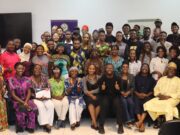


Miss Ajayi Favour, a First-Class graduate of the Department of Geology, University of Ibadan, speaks on how she overcame the disappointment of missing her preferred course, battled academic pressure and self-doubt, maintained a 3.93 CGPA, and relied on faith, discipline and determination to excel. She also discusses the relevance of Geology, her study strategies and the lessons university students can learn from her experience.
Can you introduce yourself?


My name is Ajayi Favour. I am a graduate of the Department of Geology, University of Ibadan.
You graduated with a CGPA of 3.93 out of 4.0. What does this achievement mean to you personally?
It means victory to me. I started fairly well, but as the years progressed, I constantly worried that I might make a mistake or perform poorly in a course that could affect my CGPA. When you have a high CGPA, even a small drop can make a noticeable difference.
Why did you choose Geology? Was it driven by passion, chance or influence?
Honestly, I did not choose Geology initially. I wanted to study Medicine and Surgery. I sat for the post-UTME examination but did not meet the required cut-off for Medicine, so I was offered admission to study Geology instead.
I decided to embrace the opportunity and give it my best. Although it was not my original choice, I made up my mind to excel in it.
At what point did you realise that graduating with First Class honours was achievable?
It was after my 100 level. I had a CGPA of 3.91 out of 4.0, and my original goal was actually to graduate with a perfect CGPA.
When I saw that result, I knew I had to do everything possible to maintain it. Even if it dropped slightly, I was determined that it would never fall below the First-Class category.
How challenging was it to maintain such a high CGPA throughout your undergraduate programme?
It definitely became more challenging as I progressed. People often say 100 level is the easiest, but I found it challenging too. In fact, the academic demands became tougher at every subsequent level.
Maintaining a high CGPA requires consistently earning mostly A grades. A single B or C can significantly affect your average.
As you move into higher levels, the courses become more demanding, so you have to put in even more effort just to maintain your academic standing.
Did you ever doubt your ability to sustain the performance you recorded in 100 level?
Yes, especially after 100 level. During my first year, I was just doing my own thing quietly. Not many people knew me. But when the results came out, I suddenly found myself in the spotlight.
I started asking myself, “What if I fail and people realise it was just luck?”
In 100 level, you take some courses offered by other departments, and some people believe those courses are relatively basic. But 200 level is often regarded as the real test of your academic ability. I doubted myself quite a lot. What kept me going was my faith in God. I believed that if I continued to put in the effort, God would sustain me. I held on to the conviction that He would guide me throughout the journey.
What study strategy helped you maintain your academic performance?
I believe no single study strategy works all the time. My approach changed at different stages of my university education, and I was always willing to adapt.
In 100 level, my timetable was relatively flexible, so I studied throughout the day and often at night, which was my preferred time because of the quiet environment. By 200 level, academic activities became more demanding, and I had less free time. I therefore focused on making the most of every available opportunity. I realised that studying for 30 minutes six times a day could be more effective than studying for three hours only once a week.
I did not follow an excessively rigid timetable, but I ensured that I covered as much as possible within the time available.
Geology involves fieldwork, laboratory sessions and demanding theoretical courses. How did you balance these responsibilities?
Planning and scheduling were very important to me. I enjoy planning, so I knew I had to organise my activities carefully. I had to balance fieldwork, laboratory sessions, lectures, tests and examinations. I scheduled my responsibilities and worked according to my plans to ensure that none was neglected.
Which course did you find most challenging, and how did you overcome the difficulty?
The Paleontology courses were particularly challenging, not necessarily because they were impossible to understand, but because of the volume of information involved. There were numerous names, concepts and details to remember. I overcame the challenge by starting early and revising repeatedly to improve my retention.

Was there ever a time you feared you might fail a course?
Yes. In 100 level, I struggled with a Physics laboratory course. We had several graphs to plot within a limited time, and I often found it difficult to complete all the tasks. I feared I might have a carryover. Fortunately, the parts I completed were done well, and the marks I earned helped me pass the course. In 200 level, I also struggled with a Computer Science course because I had little prior knowledge and initially lacked interest in the subject.
I decided to connect with Computer Science students who understood the course better. They helped me, and I eventually passed.
What sacrifices and personal commitments contributed to your academic success?
Two major things helped me. First, I always went the extra mile. I did not restrict myself to recommended textbooks. I searched for additional learning materials, watched educational videos on YouTube and made sure I understood the subjects I was studying. Second, I carried God along. I depended on Him for wisdom, strength and grace throughout my academic journey.

Did you experience financial or emotional challenges during your studies?
Yes, there were financial challenges. However, I am grateful to my parents for their sacrifices and support. I also received scholarships at different stages of my education, which helped reduce the financial burden.
There were emotional challenges as well, but I remained focused on my goals. Financial and emotional difficulties can make academic success more challenging, but they should not make it impossible.
How did you manage distractions, especially social media, entertainment and social activities?
I believe there is no single rule that works for everyone. You have to understand yourself and identify what works for you.
For me, I stopped watching movies during school sessions. That did not mean I completely abandoned social media, but I practised discipline. Whenever I spent time on my phone, I made sure I devoted considerably more time to studying.
I was not particularly social during the early years of my programme. Towards the end, I began to go out more, but initially, social activities were not a major part of my routine.
Can you tell us about your family background and educational journey before entering the University of Ibadan?
I come from a family of four: my parents, my younger sister and me. I attended Yomfield Nursery and Primary School, Obantoko, Abeokuta, Ogun State, and later proceeded to Federal College of Education Model Secondary School, Osiele, Abeokuta. My parents are businesspeople. My mother is a trader, while my father is a businessman. We come from a middle-class background, and they worked hard to provide the support I needed, both financially and emotionally.
My mother would always tell me, “Be the best of the best.” That statement stayed with me and became an important part of my motivation.

What misconceptions do people have about Geology, and why should young Nigerians consider studying the discipline?
One major misconception is that Geologists simply study rocks. Geology is much broader and has considerable relevance to Nigeria’s economy. Geologists help in the exploration of natural resources, including petroleum, and study the geological conditions and environments in which these resources occur.
Beyond petroleum, Geology has applications in several aspects of human life and economic development. Almost everything around us has some geological relevance. Even glass, for instance, is made from sand. It is a very relevant discipline, and I believe more young people should understand its importance.
Do you think students choose Geology out of passion or because of circumstances, as happened in your case?
I think many students enter Geology by circumstance, just as I did. However, this is often because they do not have adequate information about the discipline. When students understand its relevance and the opportunities it offers, they tend to appreciate it more. That is why outreach programmes in secondary schools are important. Students should be exposed to different scientific disciplines early enough to make informed choices about their future.
What reforms would you recommend to improve science education in Nigeria?
There should be more science education outreach programmes in secondary schools. Many students do not understand what earth sciences and other scientific disciplines truly involve. Early exposure would help increase awareness, stimulate interest and enable students to make informed academic and career decisions.
Beyond academic qualifications, what skills did studying Geology help you develop?
I acquired skills in using certain software applications and developed strong attention to detail, observation and analytical thinking. I also improved my ability to write clear and structured reports that explain complex ideas in simple language.
These are valuable skills that extend beyond the classroom and can be applied in different professional environments.
What advice would you give students who are struggling academically or hoping to graduate with First Class honours?
Do not go through university alone. Surround yourself with people who are better than you in areas where you need to improve.
At the University of Ibadan, you can study extensively and still struggle in examinations because of how questions are structured. You need to be intelligent and strategic in your approach. This does not mean cheating; it means understanding concepts, appreciating how questions are framed and preparing adequately.
Be disciplined, set ambitious goals and maintain high standards for yourself.
An average student can improve tremendously and even graduate with First Class honours through discipline, structure, consistency and the right support system.

You have repeatedly emphasised the importance of God in your academic journey. Why is faith so important to you?
Putting God first does not mean abandoning personal responsibility. God works with diligence and structure. I believe He gives wisdom, strength and grace. There was a time I studied extensively but still performed poorly in a test. That experience taught me that beyond effort, you also need wisdom and direction.
On another occasion, I remembered a particular topic shortly before an examination, even though I might have overlooked it during my preparation. A question on that topic eventually came out for almost 10 marks. I believe God gives wisdom and helps us in ways we may not always understand.
How did you balance your religious responsibilities with the demands of academic life?
Academics must come first because you are a student before anything else. You have to establish boundaries and understand that you cannot be available for every activity. You must learn to delegate responsibilities and manage your time effectively..Balance is not always perfect. Sometimes things can become chaotic, but your priorities must remain clear.
Some people describe the University of Ibadan as overrated or say its reputation is largely hype. What is your experience?
I do not think it is just hype. The academic environment challenges you to develop a deeper understanding of what you are taught. Examination questions are often structured to test your depth of understanding rather than your ability to reproduce information. They are rarely straightforward, so you must understand concepts thoroughly.
It is challenging, but that process helps build intellectual strength and prepares you to think critically.
What are your final words to students and young Nigerians who aspire to excel in their chosen fields?
Be diligent, set high goals, surround yourself with the right people and trust God to sustain you throughout your journey.
Whatever your hands find to do, do it well. If you find yourself studying a course you did not initially choose, make the best of the opportunity and excel in it. No knowledge is ever wasted.
Be hungry for growth because that is how you truly excel in any field.
The university is one of the best places to rebrand yourself. Even students who consider themselves average can become excellent if they acquire relevant skills, gain experience and develop discipline while in school.
Above all, remain close to God. You may not always understand the purpose of your efforts, but He does. He is able to write a better story than you could ever imagine.