







There are some things in public life that ought to be above party politics. Roads are among them. They are built with public money, serve citizens regardless of their political allegiance and remain long after the politicians who commission them have left office. That is why the circumstances surrounding the recent flag off of the Ibadan Ijebu Ode Road in Oyo State deserve more than the passing political exchanges they have generated.
The Federal Government is entitled to the credit for undertaking a federal road project. Nobody disputes that. The more troubling question is why the government of the state in which the project is being executed was not invited to the ceremony.


The Oyo State Government says Governor Seyi Makinde was not invited. The explanation that the Governor was away on leave does not quite settle the matter. An Acting Governor was available to perform the functions of the office. If the Federal Government wanted the Oyo State Government represented, there was an obvious institutional channel through which that could have been done.
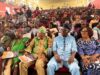
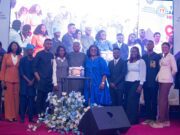
Instead, the ceremony featured the Olubadan of Ibadanland and Senator Sharafadeen Alli, the APC candidate seeking to govern Oyo State, alongside federal officials and the Governor of Ogun State.
The presence of the Olubadan is not problematic. Traditional rulers have a legitimate place in ceremonies of public importance. The question is different when the elected government of the state is absent while a partisan political figure seeking to succeed it is present.
That combination inevitably raises questions about the political colouring of what should ordinarily be an institutional occasion.
It would be reckless to claim that this, by itself, proves a deliberate partisan motive. It does not. But it creates an appearance that the Federal Government should have anticipated and, if necessary, avoided.
This is precisely why government must sometimes look beyond what is technically permissible to what is institutionally appropriate.
Nigeria has travelled this road before.
During the Second Republic, President Shehu Shagari’s NPN controlled the Federal Government while Chief Bola Ige’s UPN governed old Oyo State. The two levels of government were political adversaries, and a federal housing programme became entangled in a dispute over land, federal authority and the role of the state government.
The historical record requires some precision here. The confrontation was not merely a childish quarrel between two politicians. There were genuine legal and administrative questions surrounding land acquisition and the respective powers of the Federal Government and the state under the Land Use regime. But politics was also present. Federal and state governments were competing for influence and, inevitably, for the political credit that development could generate.
The disagreement became sufficiently serious that federal housing projects in Ibadan were caught in the confrontation. Traditional rulers and elders eventually intervened.
The lesson is not that Shagari was wrong and Ige was right, or the other way round. The lesson is that development suffers when governments begin to see one another principally as political competitors rather than institutions serving the same citizens.
There is another historical distinction worth preserving. The Offa Meta Low Cost Housing Scheme in Oyo town belongs to the housing history of that period, but it should not be casually presented as the same thing as the Federal Government’s housing programme under Shagari. Historical accuracy matters, particularly when history is being summoned to interrogate contemporary conduct.
The broader point, however, remains.
Nearly half a century later, Nigeria ought to have moved beyond the culture in which a federal or state government feels compelled to diminish the other in order to establish ownership of a development achievement.
The Ibadan Ijebu Ode Road is a federal road. The Federal Government is entitled to say so. It is entitled to tell Nigerians that it is funding the project, that its administration is responsible for it and that it expects the road to improve transportation and commerce between the communities it connects.
But none of that requires the exclusion of the Oyo State Government.
Inviting the state government would not have transferred ownership of the road to Ibadan. It would simply have acknowledged the constitutional reality that the road runs through a state with an elected government.
If Governor Makinde was unavailable, the Acting Governor could have represented him. If the Federal Government had genuine protocol reasons for not inviting either, Nigerians deserve to know what those reasons were.
That is a reasonable question, not a partisan accusation.
It becomes even more reasonable when the political context is considered. Nigeria is already moving towards another election cycle. The APC candidate for the Oyo governorship was present at the ceremony while the incumbent administration says it was not invited.
Perhaps there is an entirely innocent explanation.
If there is, Abuja should provide it.
Government should not leave citizens to interpret institutional decisions through the prism of party politics.
This is bigger than Governor Makinde. It is bigger than President Tinubu. It is bigger than APC and PDP.
It concerns the character of government.
A federal project should not become a campaign asset simply because an election is approaching. Neither should a state government treat a federal intervention as an intrusion merely because it comes from an administration controlled by another party. Both attitudes are equally dangerous.
The citizen has little interest in who cuts the ribbon. He wants the road completed. He wants it properly constructed. He wants it maintained. He wants the journey from Ibadan to Ijebu Ode to become safer, faster and more productive.
He does not care whether the contractor’s political loyalty is to APC, PDP or no party at all.
That is the perspective from which governments ought to operate.
Unfortunately, Nigerian politics has repeatedly demonstrated an appetite for claiming development as political property. Projects are renamed, relaunched and sometimes abandoned when administrations change. Federal and state authorities quarrel over who initiated them. Politicians compete for the photograph while citizens wait for completion.
This is not governance. It is political ownership masquerading as public administration.
The Tinubu administration has an opportunity to demonstrate that it understands the difference.
It should not matter that the governor of Oyo State belongs to another party. The Federal Government has a responsibility to work with state governments, including those controlled by the opposition. That is the essence of federalism. The President is President of Nigeria, not merely President of the party that produced him.
The same principle applies to Governor Makinde. He should welcome the federal project and give Abuja the credit due to it. But he should equally resist the temptation to turn exclusion from a ceremony into a battle over political relevance.
The road is more important than the ribbon cutting.
The people are more important than the politicians standing behind the ribbon.
And the institution of government is more enduring than the party occupying the office.
Nigeria should have learnt this lesson by now.
Almost five decades after the NPN and UPN fought over development projects and political space, we should not still be asking which party owns a road.
No political party owns a public project. No government owns the people. Public infrastructure belongs to the nation, and the responsibility for delivering it belongs to government.
The Ibadan Ijebu Ode Road should therefore be allowed to remain what it was meant to be from the beginning: a road connecting people, not another political line dividing governments.
Ogundipe is a public affairs analyst, former President Nigeria and Africa Union of Journalists writes from Abuja.