











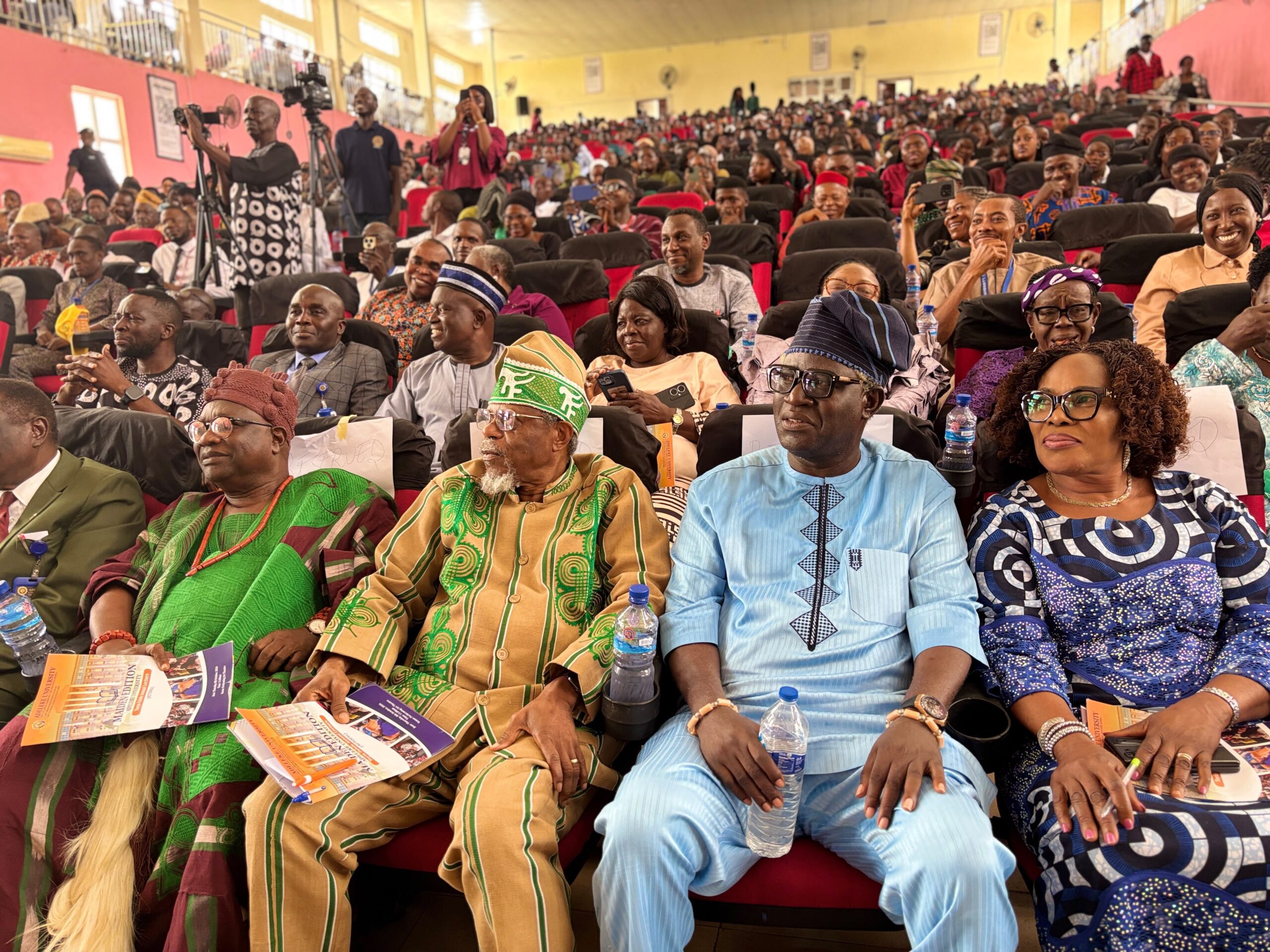
Nigeria and other African countries must move beyond the extraction and export of natural resources and build productive industries capable of creating, retaining and extending value within their economies, Professor Adelaja Odukoya, guest lecturer at the maiden Adeleke University Toyin Falola Annual Lecture, has said.

Odukoya made the argument while delivering the guest lecture at the inaugural Adeleke University Toyin Falola Annual Lecture (AUTOFAL) held in Ede on Thursday, where he stressed that the possession of abundant natural resources would have limited developmental significance unless such resources were transformed into productive and technological capabilities.
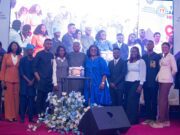
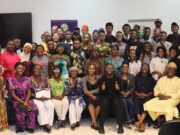
The lecture, organised in celebration of renowned historian and public intellectual, Professor Toyin Falola, had as its theme, “History, Power and Accumulation: Reimagining Africa in the Globally Disorderly Order.”
Odukoya, a Professor of Political Economy, placed value creation at the centre of Africa’s development challenge, arguing that the continent’s natural-resource wealth must be connected to productive structures that generate lasting economic benefits.
“What is germane and at the core of development transformation is how value is created, retained and extended through production,” he said.
The statement, according to Odukoya, points to a fundamental distinction between possessing resources and using them to transform an economy. A country may have vast deposits of minerals, oil, gas and other natural assets and yet remain economically dependent if it lacks the industrial capacity to process those resources and capture the greater value generated from them.
He warned that Africa could become increasingly integrated into the global economy without developing the productive structures necessary for genuine economic transformation.
Investment, he argued, could enter the continent without producing substantial technological transfer; exports could increase without corresponding growth in local processing industries; and infrastructure could be developed without significantly strengthening domestic productive capacity.
Such a pattern, Odukoya suggested, risks reproducing the very structures of dependency that African countries have sought to overcome.
His argument was reinforced by his warning that economic accumulation should not automatically be equated with development.
“Accumulation is not synonymous with development,” he said.
The distinction is particularly significant for Nigeria, whose economic history has been heavily influenced by the extraction and export of natural resources, especially crude oil. For Odukoya, the central question is therefore not simply how much wealth is generated from natural resources, but how much of that wealth is converted into productive capacity within the country.
The guest lecturer’s intervention formed part of a wider discussion at the maiden lecture on the relationship between history, power, accumulation and Africa’s place in a changing global order.
Professor Toyin Falola, whose intellectual contributions were being celebrated through the establishment of the annual lecture, similarly emphasised the need for Africa to transform its enormous resource endowment into productive power.
“It is more important to know how Africa turns its great resources into power,” Falola said.
Falola argued that Africa’s resource question could not be separated from the historical processes through which the continent’s wealth, labour and knowledge had been extracted and accumulated.
He noted that colonialism was not merely a political arrangement but also an economic system that shaped the extraction and transformation of African resources and contributed to the continent’s continuing position in the global economy.
For Falola, however, understanding this history should not lead Africa towards withdrawal from the global system. Rather, it should strengthen the continent’s capacity to participate in that system on more equitable terms.
“The future imagined through this intellectual tradition is therefore not a future in which Africa withdraws from the world,” Falola said, arguing instead for “equitable participation” in globalisation.
He maintained that Africa must enter the global system with stronger institutions, greater knowledge and increased confidence in its capacity to shape global economic and intellectual processes.
Falola also stressed the importance of linking knowledge production to government policy and industrial development.
“There must be universities that generate new knowledge; there must be governments that translate this knowledge into policies; there must be industries that add value to the continent’s natural resources,” he said.