








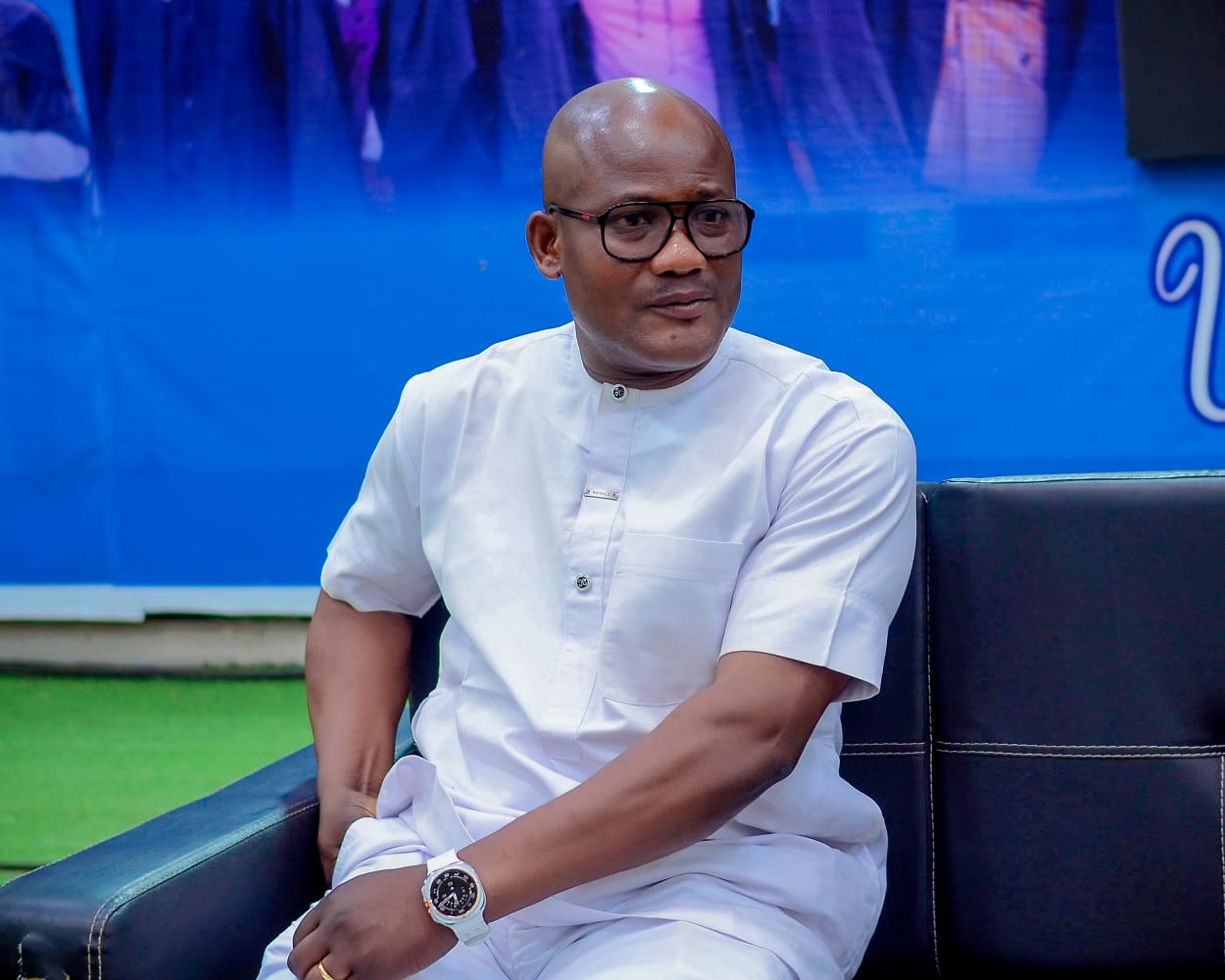
Six doctoral scholars who recently completed their Ph.D. programmes at Ajayi Crowther University, Oyo, have been identified as part of the academic legacy of a former Deputy Vice-Chancellor of the institution, Professor Benjamin Olumuyiwa Popoola.

The scholars are Lanrewaju Gabriel Arogundade, Olayinka Olajumoke Idowu, Olugbenga Olanrewaju Akanmu, Helen Olawore, Adewale ‘Wale Ajayi and Oluwaseyi Luke Adebayo.
Their achievements, according to a piece written by Olufemi Timothy Ogunyejo, a Ph.D. student in Publishing and Copyright Studies at the University of Ibadan, reflect Popoola’s commitment to academic mentorship, research development and human-capacity building.
The article, titled: “Ajayi Crowther University’s Scholar-Maker: Professor Benjamin Olumuyiwa Popoola, Six Doctoral Scholars and the Multiplication of Progressive Scholarship,” describes the professor as a scholar-maker whose influence extends beyond classroom teaching to the development of independent researchers and future academics.
Popoola, who has served Ajayi Crowther University in several capacities, including Head of Department, Director of the Media Centre, Dean and Deputy Vice-Chancellor, obtained a First-Class degree in Mass Communication from the University of Nigeria, Nsukka, in 1999.
He later earned an M.Sc. in Mass Communication from the University of Lagos and a Ph.D. in Media and Cultural Studies from the University of Ibadan in 2012. He was inducted into the Nigerian Academy of Letters in 2022.
The six doctoral researchers investigated different aspects of communication and media studies, reflecting the breadth of Popoola’s academic supervision.
Arogundade’s thesis examined the psycho-social factors and political economy elements affecting the safety of journalists and media professionalism in Nigeria, while Idowu researched knowledge, attitude and practice towards malnutrition messages among nursing mothers in selected primary healthcare centres in Lagos State.
Akanmu’s study focused on the reportage of science and technology news in selected Nigerian newspapers between June 2014 and May 2024.
Ajayi examined social media usage and self-concept among final-year Mass Communication undergraduates at selected universities in Lagos State, while Olawore researched newspaper reportage of youth mental health in Nigeria.
Adebayo’s doctoral research explored social media, political participation and grassroots governance in South-West Nigeria.
The piece noted that the studies addressed different research questions but shared a common concern with the relationship between communication, media and society.
It added that the significance of the six doctoral completions went beyond the award of academic degrees, describing them as evidence of the role of rigorous supervision in developing researchers capable of contributing to knowledge and mentoring future scholars.
According to the author of the piece, effective doctoral supervision involves more than correcting grammatical errors or reviewing thesis chapters. It requires interrogating ideas, challenging assumptions, demanding clarity, testing methodology and ensuring that research findings make meaningful contributions to knowledge.
The piece also highlighted Popoola’s teaching approach, particularly his use of gestures, facial expressions, pauses and eye contact to reinforce explanations, encourage critical thinking and communicate intellectual expectations.
It argued that academic mentorship should not produce replicas of supervisors but should help students develop independent research interests and intellectual identities.
Describing this process as the multiplication of scholarship, Ogunyejo said the six scholars could, in turn, contribute to research, teaching, publishing and the mentoring of subsequent generations of academics.
He, however, acknowledged that doctoral education is a collective undertaking involving candidates, supervisors, co-supervisors, external examiners, lecturers, research participants, librarians and the university system.
The piece urged the six graduates to regard their doctoral qualifications as the beginning of further responsibilities in research, teaching, knowledge production and human-capacity development.