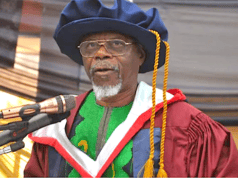














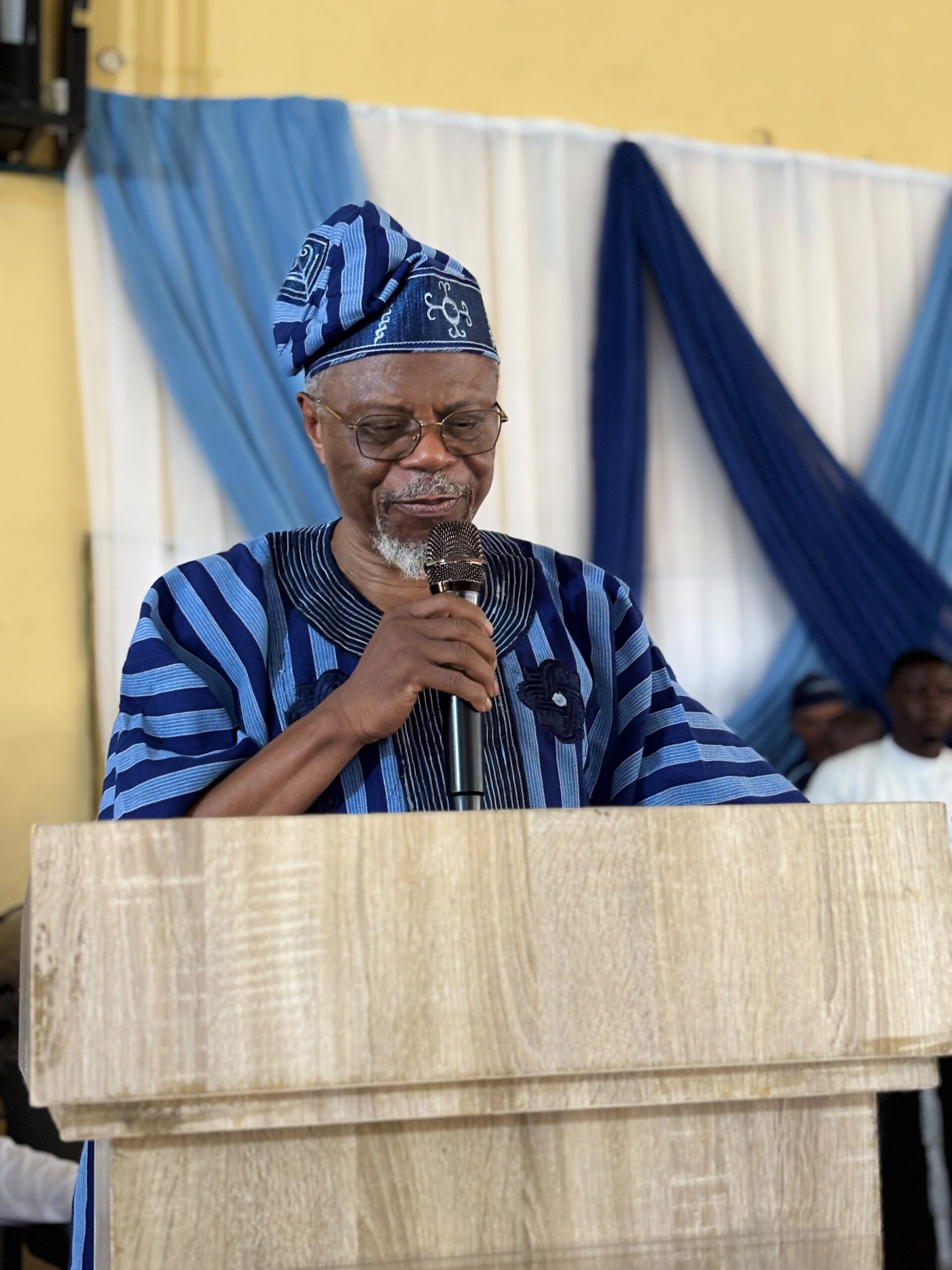
Professor Toyin Falola has challenged Nigerian universities, policymakers and intellectual institutions to abandon lingering assumptions about the inferiority of African knowledge systems, even as the Alaafin Institute of Yoruba Studies honoured him for his outstanding global promotion of Yoruba language, history and culture.


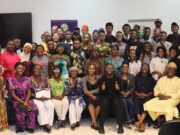
The distinguished recognition was presented during the inauguration of the Alaafin Institute of Yoruba Studies at Emmanuel Alayande University of Education, Oyo, where Falola delivered the keynote lecture titled “Yorùbá Mythologies and Their Relevance Today.” The event, themed “Preserving the Past, Educating the Future: The Renaissance of Yoruba Intellectualism,” drew scholars, traditional rulers, students and cultural advocates from across Nigeria.
The institute cited Falola’s decades of scholarship, mentorship, publications and international advocacy in promoting Yoruba civilisation. According to the citation, the award recognises his global promotion of Yoruba language, history and culture and his enduring efforts to project Yoruba intellectual traditions on the world stage.
Delivering the keynote address shortly after receiving the honour, Falola argued that Yoruba mythology should no longer be dismissed as folklore or primitive belief but understood as a sophisticated intellectual tradition capable of contributing meaningfully to philosophy, ethics, governance, psychology and global scholarship
According to the eminent historian, one of Africa’s greatest intellectual challenges is not the absence of knowledge but the persistence of colonial assumptions that continue to measure African philosophies against Western standards.
He argued that Yorùbá mythology should no longer be dismissed as folklore or primitive belief but appreciated as an elaborate system of philosophy developed over centuries to explain humanity, morality, governance and the universe.
At the beginning of his lecture, Falola described Yorùbá mythology as far more than stories passed down through generations.
“Yorùbá mythology is a layered intellectual architecture. It is philosophy presented through narrative, theology expressed through poetry, ethics embedded in ritual, and political theory encoded in myth.”
He stressed that the myths were developed to answer the same existential questions that have occupied philosophers across civilizations.
“The questions asked by Yorùbá mythology are not different from those asked by Plato, Aristotle, Confucius, or the Enlightenment thinkers. They ask what it means to be human, what justice requires, why suffering exists, how power should be exercised, what constitutes a good society, and how individuals should relate to one another and to the cosmos. Their responses deserve the same kind of intellectual seriousness we bring to Plato or Confucius.”
Falola lamented that despite their philosophical depth, African intellectual traditions have historically been marginalized within formal education systems because of colonial attitudes that privileged European knowledge while dismissing indigenous epistemologies.
He argued that this historical imbalance continues to influence contemporary academic institutions.
“It is a sign of the difficulty this lecture has been exploring that there is a need to justify the importance of Yorùbá mythology,” he observed.
“It is the consequence of the ingrained, unspoken but ever-present attitude that African intellectual traditions are temporary, parochial, susceptible to revision, and must justify themselves in terms defined by others. We need to challenge this notion, and we need to do so by changing the discussion.”
The professor insisted that the continued demand for African philosophies to prove their relevance reveals the lingering effects of epistemic colonialism.
Unlike Western philosophical traditions whose importance is largely taken for granted, he noted that African intellectual systems are continually required to defend their legitimacy before being accepted within mainstream scholarship.
Rejecting this double standard, Falola declared that Yorùbá mythology has already demonstrated its enduring relevance through centuries of resilience and global influence.
“Yorùbá mythology isn’t trying to be relevant. No audition required. It has already moulded the moral consciousness of millions of people on four continents, withstood some of the most brutal suppression ever visited upon any tradition, and offered a pattern of human flourishing that has proved surprisingly tough under radically different historical conditions.”
He noted that despite slavery, colonial persecution and sustained efforts to eradicate African religions, Yorùbá philosophy survived across Africa, the Caribbean, Latin America, Europe and North America.
According to him, the remarkable survival of traditions such as Candomblé, Lucumí and Ifá worship demonstrates that African civilizations possess intellectual systems capable of adapting to changing historical circumstances without losing their philosophical foundations.
Falola maintained that the issue facing African scholarship is therefore institutional rather than intellectual.
“The issue is not whether Yorùbá mythology is significant. The issue is whether we, the intellectual and cultural institutions that generate and disseminate knowledge, the universities, the publishers, the museums, the policy organisations, are prepared to accept it as such.”
He urged universities to move beyond token recognition of indigenous knowledge by integrating African philosophies into mainstream teaching, research and policy development.
“This implies putting it in philosophy courses with Aristotle and Descartes. To treat the corpus of Ifá as a serious object of scholarship, with the same resources as are devoted to Greek or Latin literature,” he said.
Falola further emphasized that African philosophies are not exclusively ethnic traditions but intellectual resources with universal relevance.
Speaking on the broader significance of Yorùbá cosmology, he explained that its central philosophical ideas speak to fundamental human concerns that transcend geography or ethnicity.
“The philosophical ideas that are built into this tradition, about the relational nature of the person, about the ethics of reciprocity, about the connection of the material and the spiritual, about the nature of time and ancestral duty, are not ethnically distinct. They are solutions to human questions, and human questions are everybody’s questions. Sharing does not subtract from tradition; it expands it.”
He dismissed fears that opening African traditions to wider scholarship would diminish their authenticity.
“A frequent concern regarding African intellectual traditions is that they demand the exclusion of outsiders and that sharing them reduces their potency. This is a scarcity mentality that the tradition itself rejects. After all, Ifá was created to speak to anybody who comes to the mat for wisdom. The Òrìṣà have never asked for ethnic credentials before accepting worship. The universalist ambition at the center of Yorùbá ideology is not an invention. It was there from the start.”
Falola also argued that African knowledge systems continue to influence contemporary literature, religion, psychology, governance, music, visual arts and performance traditions around the world, proving that they remain living intellectual traditions rather than historical curiosities.
He therefore challenged Nigerian universities and research institutions to become leaders in reclaiming Africa’s intellectual heritage by investing in indigenous scholarship, supporting African-centered research and creating academic spaces where traditional knowledge receives equal scholarly attention.
According to him, the establishment of the Alaafin Institute of Yoruba Studies presents an important opportunity to reverse decades of epistemic marginalization and reposition African knowledge systems at the centre of global intellectual discourse.